In a collaboration between TERLAN experts and scientists from the Poznań University of Technology, an innovative service for spray-applied rehabilitation of water mains using COVERLAN hybrid composites was implemented in 2019.
The experience gained in the rehabilitation of water and industrial infrastructures makes this technology unique and reliable, what is evidenced by the awards we won, namely the “Laurels of Innovation 2021” awarded by the Supreme Technical Organisation of the Federation of Scientific and Technical Associations (NOT) and the “Product of the Year” award at the 19th International Conference “Trenchless Engineering 2021”.


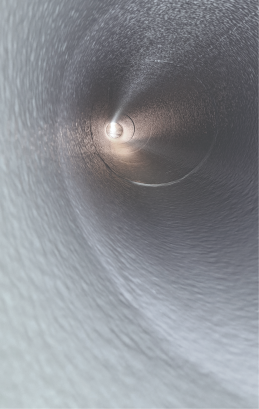

We encourage you to learn more about this technology.
COVERLAN hybrid spray composite is a fast-setting chemically curing coating based on polyurea resins, reinforced with basalt rock microfibres. The flexibility of polyurea combined with basalt micro-reinforcement creates a rigid composite closely cooperating with the pipeline with min. 13% elongation at break under tensile stress.
Depending on the applied thickness, the composite can perform two tasks: anti-corrosion protection or structural reinforcement of the pipeline. The coating is smooth, which significantly hinders the deposition of hard elements on the pipeline walls. The short curing time of the hybrid composite minimizes the downtime of the treated pipelines.
Adhesion to the parent pipe makes the operation of the pipeline after rehabilitation doesn’t differ from the one experienced before the process. As a result, water and sewage companies are able to significantly reduce costs directly related to water supply interruptions.
Possibilities:
- diameter range DN150-DN1200 (diameters above DN1200 available on request; recommended diameter range DN400-DN1200)
- installation length: up to 170 m (up to 300 m for diameters larger than DN800)
- overcoming underground curves from 15° to 90° (depending on the diameter and design of the curves)
- tight-fitting coating maximises internal diameter while maintaining throughput
Technical specification:
Why is it worth using?
The innovation of COVERLAN technology translates into tangible benefits that should be taken into account when planning an investment. They concern environmental, financial, and functional aspects.
1
THE COATING IS SELF-SUPPORTING.
This means that during its 50-year lifespan, it is resistant to the corrosion punctures that can occur when the pipe is corroding from the outside.
2
improvement of pipe hydraulics
The coating adheres tightly to the pipeline surface to maximize the cross-sectional area of the pipeline, and the smoothness of the coating makes it difficult for hard deposits to build up in the pipe.
3
no change in pipeline operation after rehabilitation
The coating works together with the parent pipe; no additional tools are required to drill new connections or make process cuts for T-pieces or additional fittings.
4
THE TECHNOLOGY ALLOWS YOU TO ADAPT TO CHANGES IN THE DIAMETER AND NARROWING OF THE PIPELINE, SMOOTHLY OVERCOMES BENDS (up to 90°)
Cooling systems of power plants are notable for their large number of elbows and fittings, making the use of other methods, e.g. CIPP, very difficult.
5
NOT ONLY UNDERGROUND!
Thanks to the adhesion to the pipe surface and resistance to elongation of min. 4%, the technology creates a permanent pipe-coating bond, which also allows rehabilitation of the overhead pipelines.
6
full cost optimisation
By flexible selection of coating thickness depending on the current condition of the pipeline.
7
minimum technological trench (max. 3 x 4 m)
Also minimal interference with the parent pipeline (2 m pipeline cut) what allows to maintain the traffic during the works and reduce the site restoration costs.
8
minimizing the amount of equipment on the construction site
Direct impact on the size of the construction site and the scale of the ecosystem interference.
The COVERLAN pipeline rehabilitation process can be divided into 3 stages: preparation – spraying – inspection.
01
Preparation
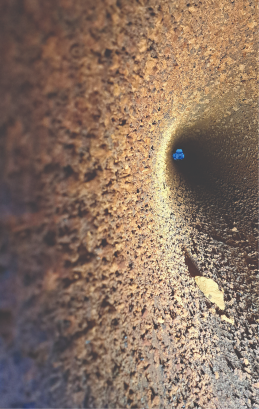
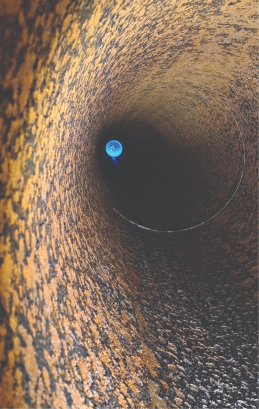
This includes all the works required to preparation of the site and the starting chambers, including cutting into the pipeline itself. The pipeline surface must be clean and in good condition, free of rust, impregnants, foreign particles and any other materials. Therefore, the pipeline is cleaned and dried, after which all surface pitting is filled.
1.1
Cleaning
Once opened, the pipeline should be inspected by CCTV. Pre-cleaning involves the removal of tarnish and scale permanently adhering to the pipeline. This step can be skipped if pipeline conditions allow. The actual cleaning should be carried out using a high-pressure water jet. High-pressure cleaning prepares the pipeline for spraying. In hard-to-reach areas, manual cleaning is recommended.
1.2
Drying
After cleaning, the pipe must be thoroughly dried, as material cannot be applied to a wet surface. Adequate drying of the surface after cleaning determines the quality of the adhesion of the coating to the pipe. This can be achieved by leaving the pipeline open, allowing the pipe to dry naturally. This process can be assisted by using fans or manual drying. The basic method for ensuring that the pipeline has been properly dried is organoleptic verification, as well as verification using a CCTV camera.
1.3
Defect filling
If camera verification reveals issues with the structure of the pipeline, supportive measures should be used to fill any detected defects. Any cracks, holes and gaps present inside the pipeline should be repaired before the commencing of the spraying process.

02
Spraying
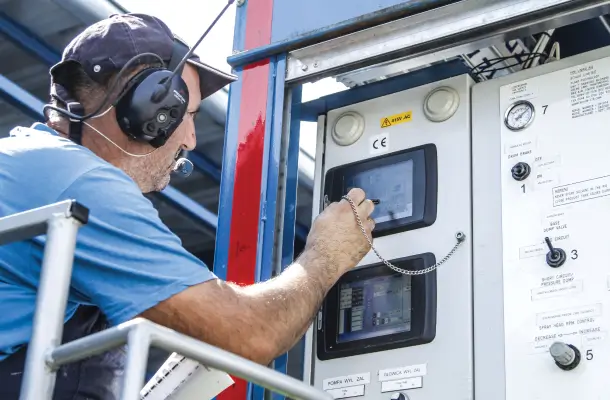
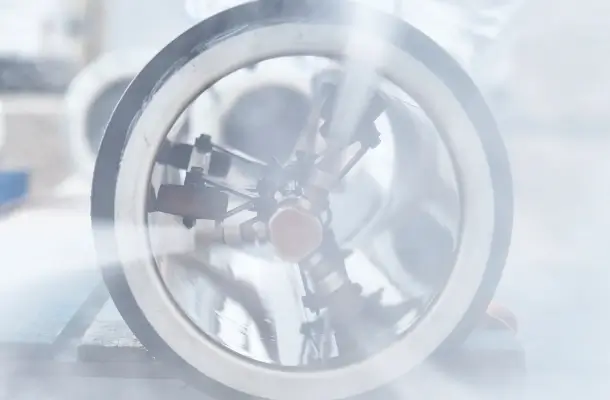
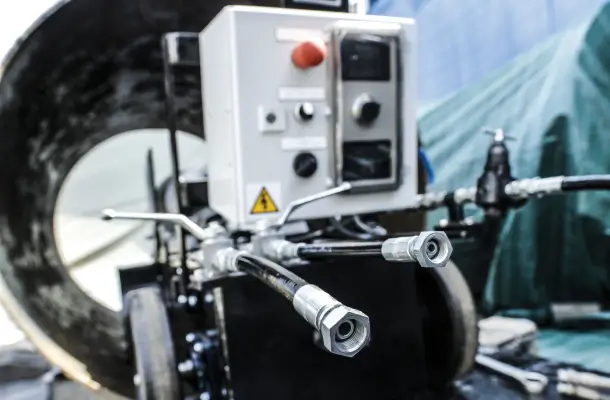
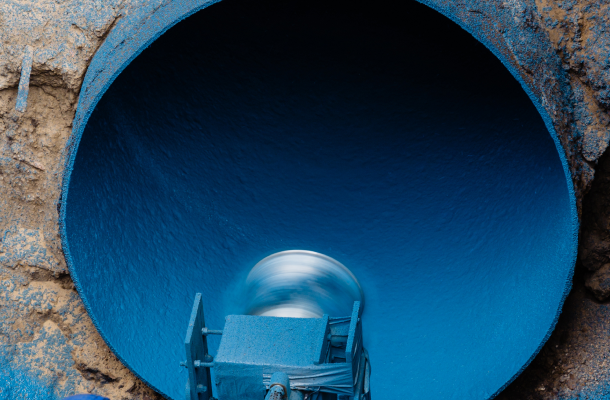
The material is sprayed by mixing it in a special RIG spraying machine, which then feeds the material via a spraying hose onto a spraying trolley, where it is automatically applied to the inside walls of the pipeline using centrifugal force.
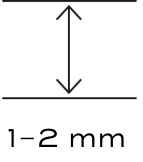
COVERLAN should be applied in layers 1 mm to 2 mm thick in a single-pass mode. Multiple passes can be made when additional coating layers are required. The wall thickness is determined individually, depending on the prevailing pressure in the pipeline.
COVERLAN should not be applied to substrates with temperatures below 5.0°C.
03
Inspection
The entire spraying process is controlled by a qualified operator and recorded by the spraying machine using digital and analog methods.
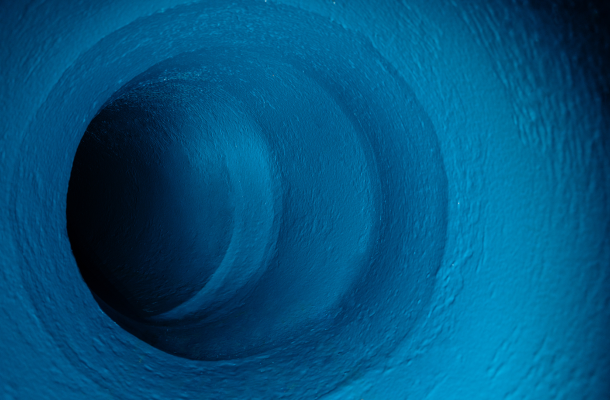
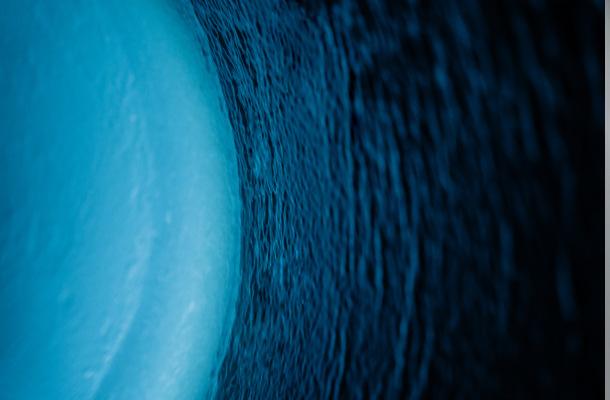
The surface of the COVERLAN coating forms a tight barrier protecting the pipeline against abrasion, corrosion, and the flowing medium.